Laser Cutting Machine

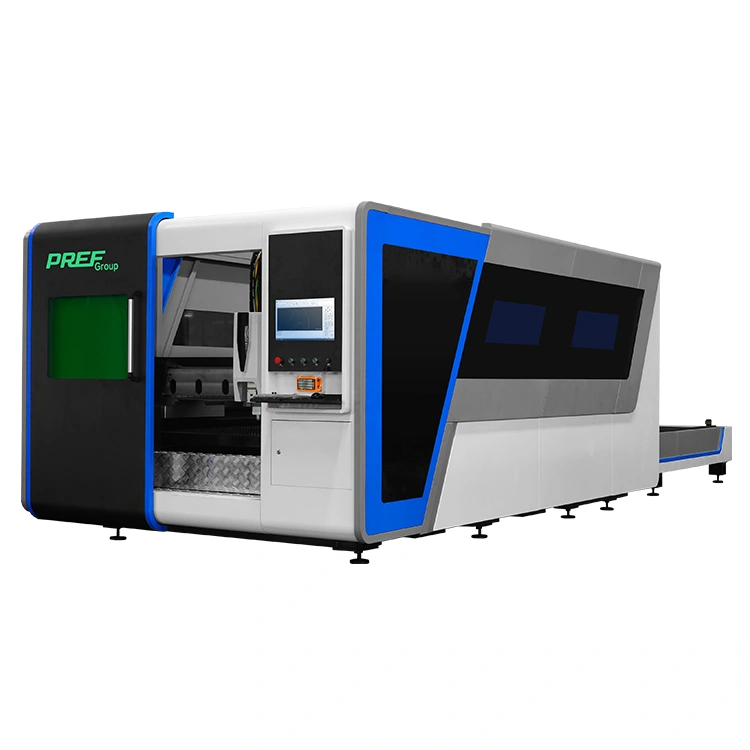
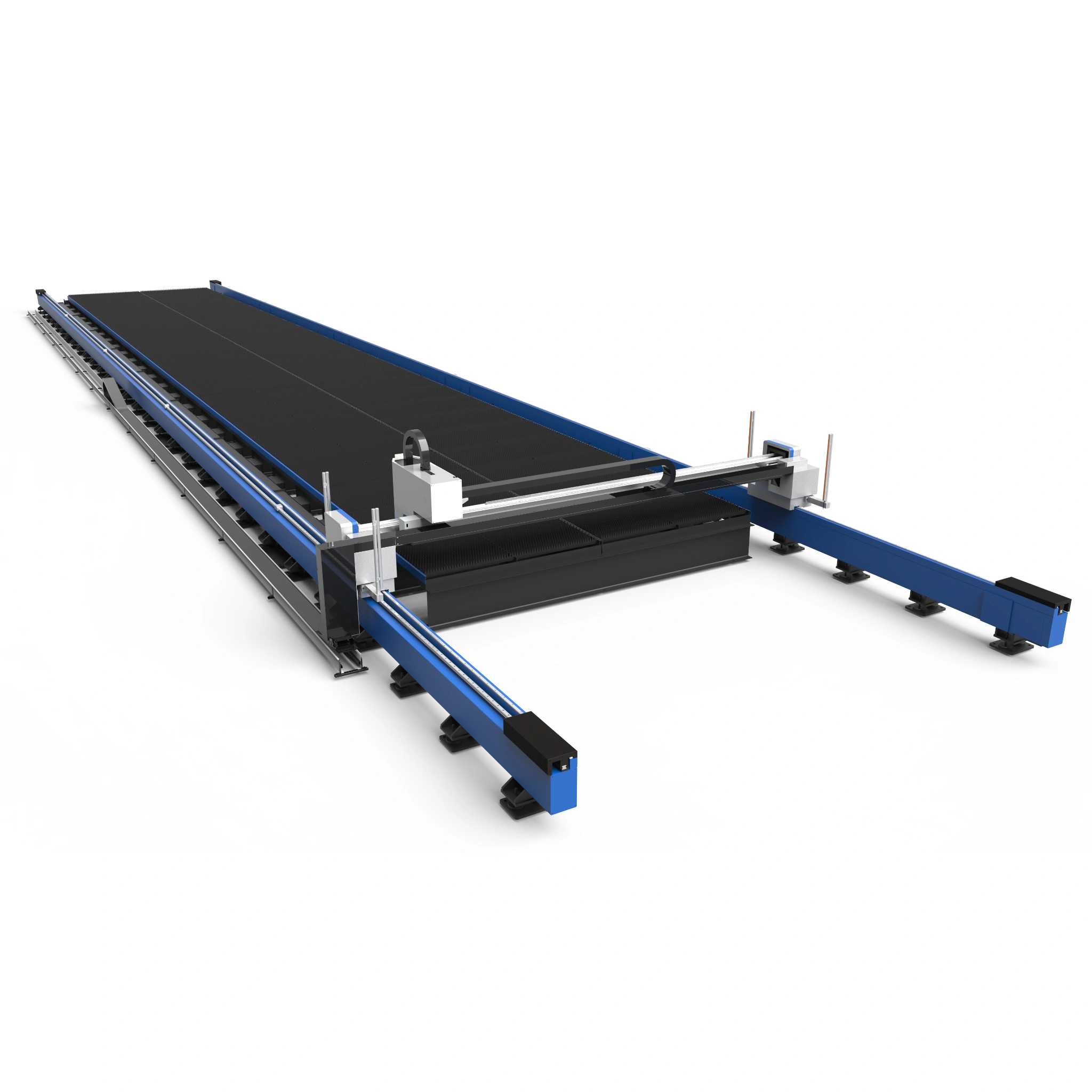
Exchange Table Laser Cutting Machine

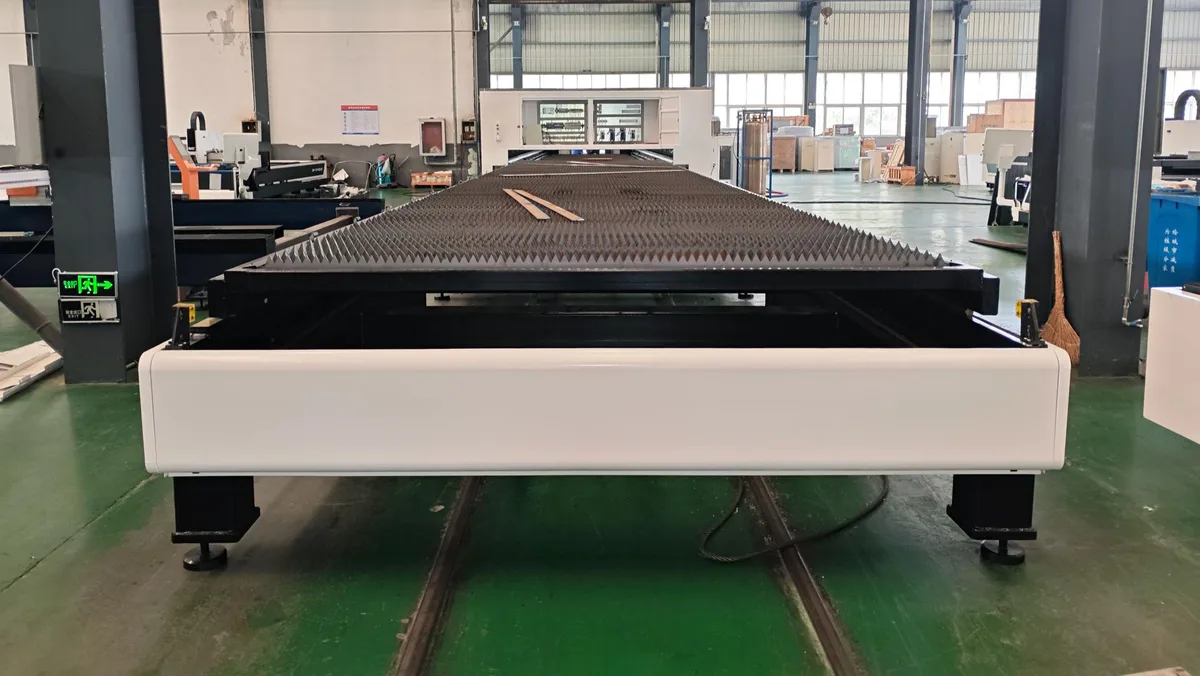
An exchange table laser cutting machine reduces loading and unloading downtime by allowing one table to be prepared while the other table is cutting. It is suited to factories where cutting output, operator efficiency, and continuous production matter.

Main Features

  1. The new enclosed design and fast dual-worktable exchange allow processing and unloading at the same time.

  2. It features fast speed, small kerf, smooth cutting section, easy operation, and low energy consumption.

  3. It is suitable for large-volume continuous processing and highlights cutting competitiveness.

Detailed Description

Configuration Details

Exchange table laser cutting machine mechanical bed

Mechanical Bed

The mechanical bed uses a reinforced welded structure designed for stable laser cutting operation. Multiple rectangular tube sections and internal stiffeners improve strength, tensile resistance, and vibration control during high-speed movement.

The bed can be treated with high-temperature annealing, shot blasting, and stress relief processing to reduce internal stress and limit long-term deformation. For exchange table laser cutting machines, bed stability is especially important because the machine must maintain cutting accuracy while supporting fast table exchange and continuous production.

Exchange table laser cutting machine beam

Beam

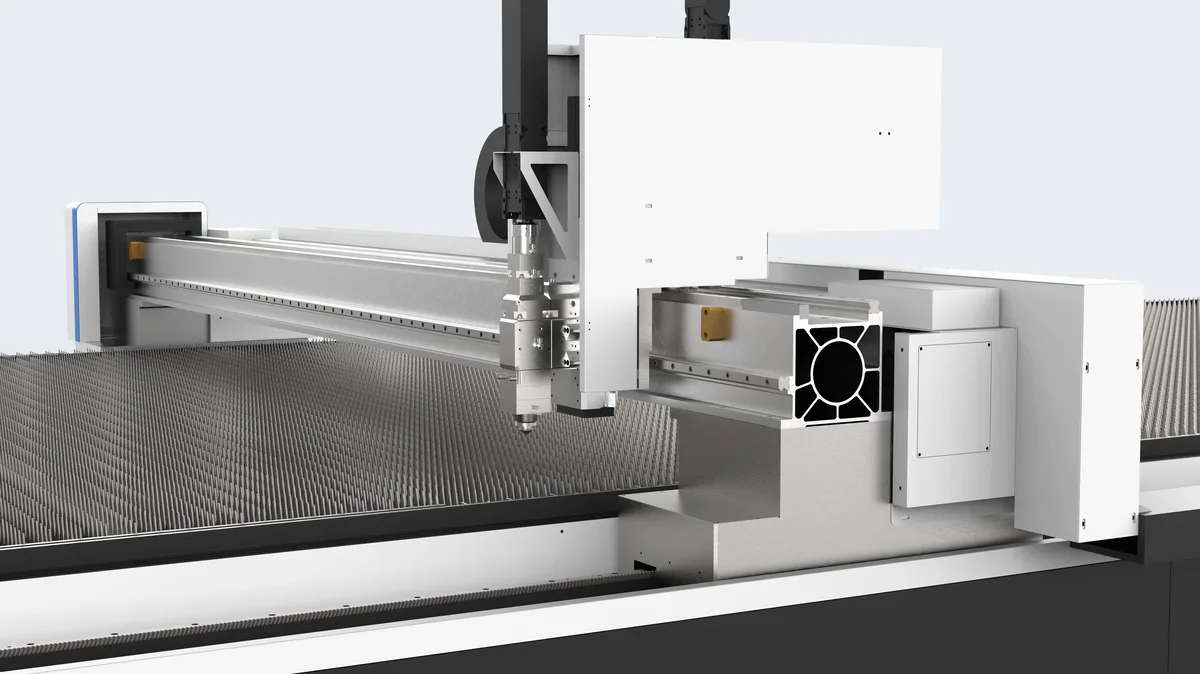
The beam is designed to combine high rigidity with lightweight motion performance. A low-inertia beam helps the machine achieve faster acceleration and smoother dynamic response during contour cutting.

Finite element analysis can be used to optimize beam structure, reduce vibration, and improve motion stability. This supports higher cutting speed while maintaining accurate positioning and clean cutting edges.

Exchange table laser cutting machine laser source

Laser Source

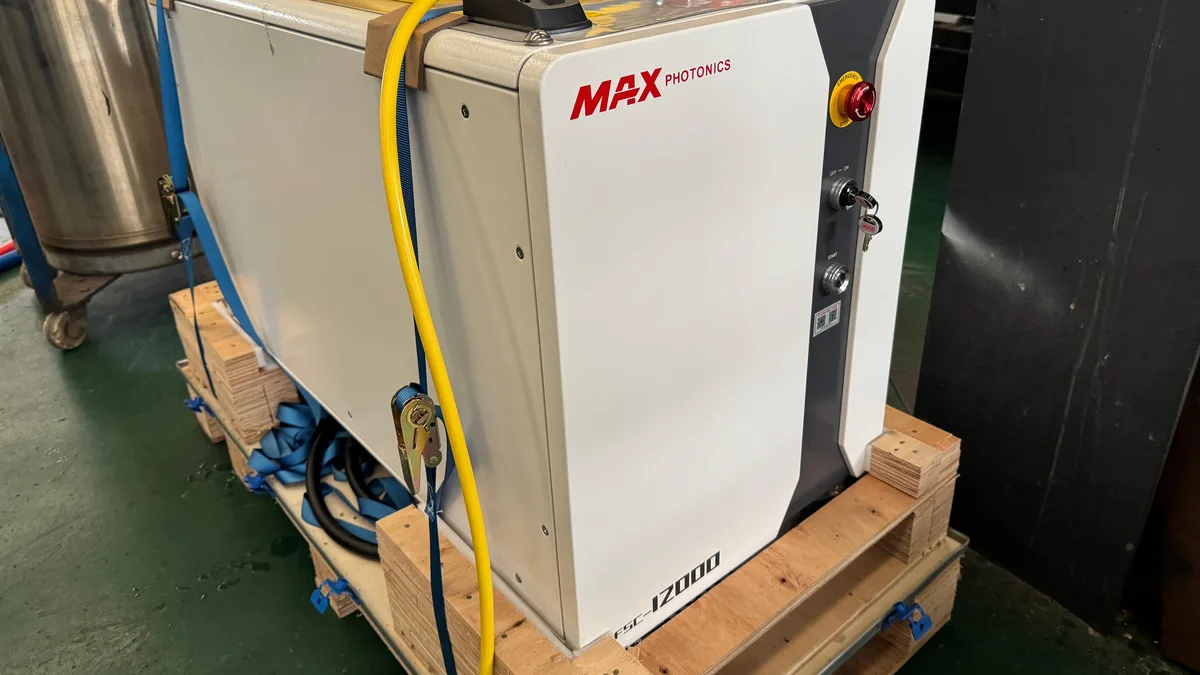
The fiber laser source provides the main cutting energy and can be selected according to material type, plate thickness, cutting speed, and production capacity. Different power levels allow the machine to handle both thin sheet cutting and heavier plate applications.

High-quality laser sources offer stable beam quality, high electro-optical conversion efficiency, compact structure, and convenient maintenance. A reliable source improves piercing performance, cutting speed, and long-term production stability.

Exchange table laser cutting machine cutting head

Cutting Head

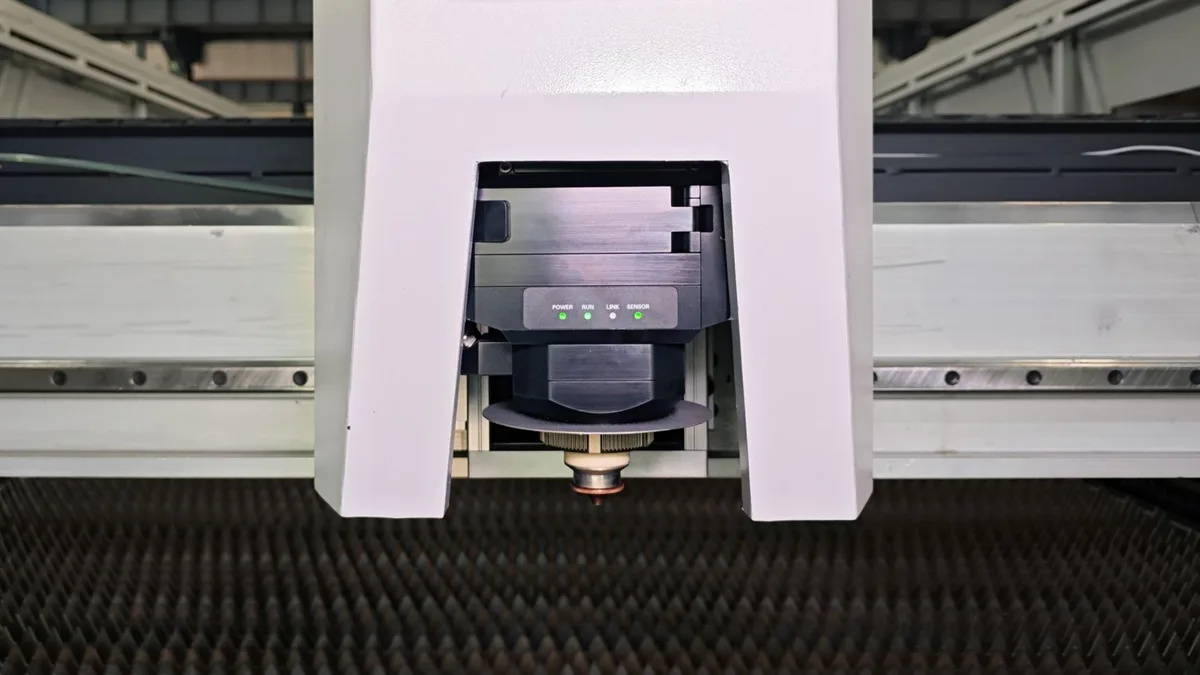
The auto-focusing cutting head adjusts focus position according to material thickness and process requirements. This reduces manual setup time and helps maintain stable cutting quality across different materials.

Anti-collision protection and stable optical design help protect the cutting head during high-speed cutting. The cutting head works with the control system to improve piercing, kerf quality, and cutting consistency.

Exchange table laser cutting machine control system

Control System

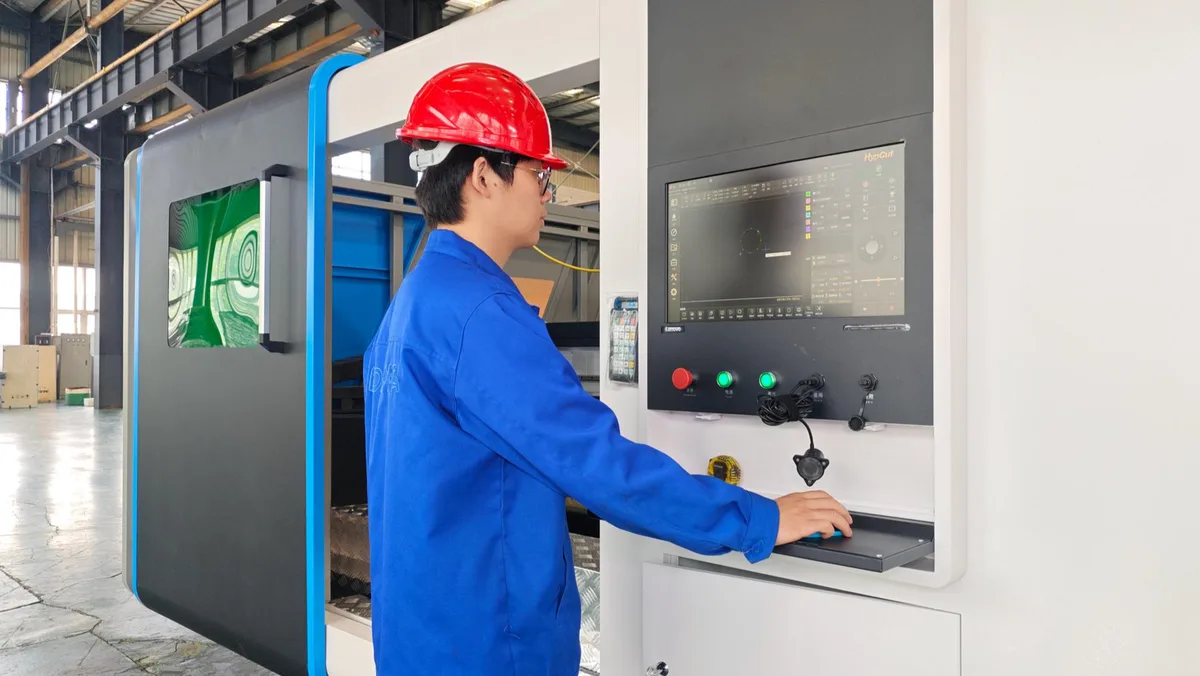
The control system manages cutting path, nesting files, speed control, gas control, piercing parameters, and process databases. It helps operators prepare cutting jobs quickly and run production with stable motion control.

Professional fiber laser cutting software supports power-based speed adjustment, imported linear speed settings, and cutting process libraries. For exchange table machines, control coordination also supports efficient loading, unloading, and cutting-cycle management.

Exchange table laser cutting machine electrical system

Electrical System

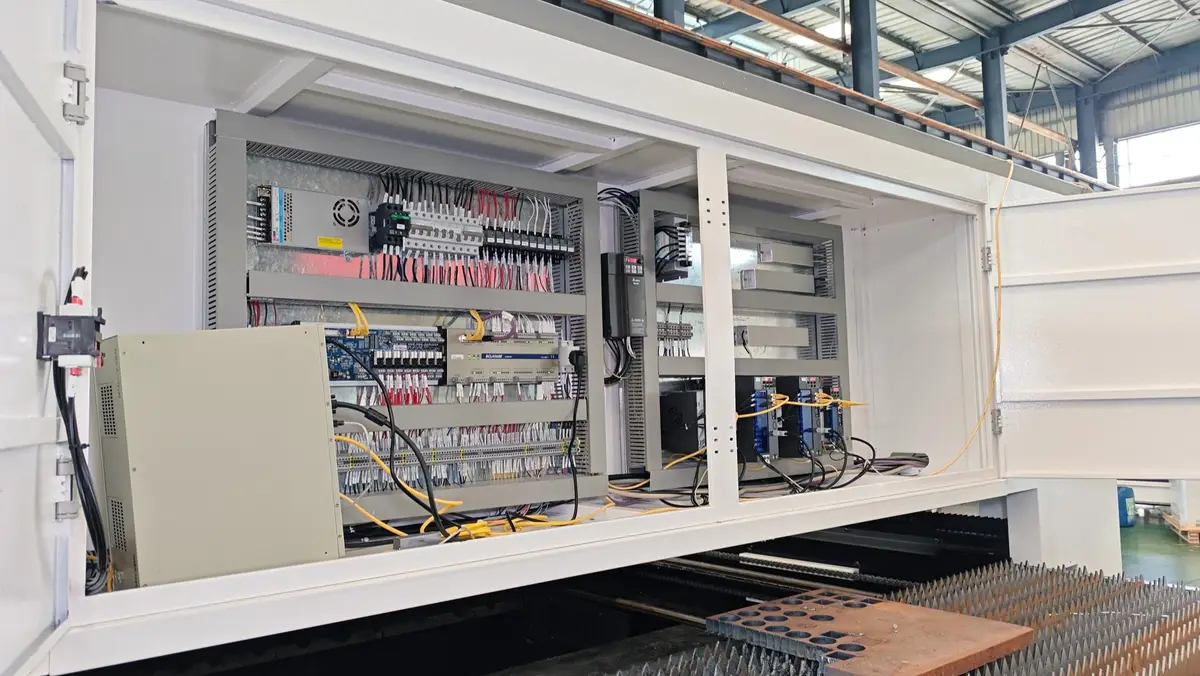
The electrical system integrates the CNC controller, servo drives, power supply modules, relays, circuit protection components, signal terminals, and cabinet cooling devices in a structured layout. A clean electrical cabinet design helps reduce interference, improve heat dissipation, and make daily inspection or maintenance more efficient.

For a fiber laser cutting machine, stable electrical control is directly related to cutting path accuracy, servo response, laser output coordination, gas control, safety interlock, and continuous production reliability. Proper wiring, reliable grounding, and protected electrical components help the machine maintain stable performance during high-speed cutting and long working shifts.

Exchange table laser cutting machine water chiller

Water Chiller

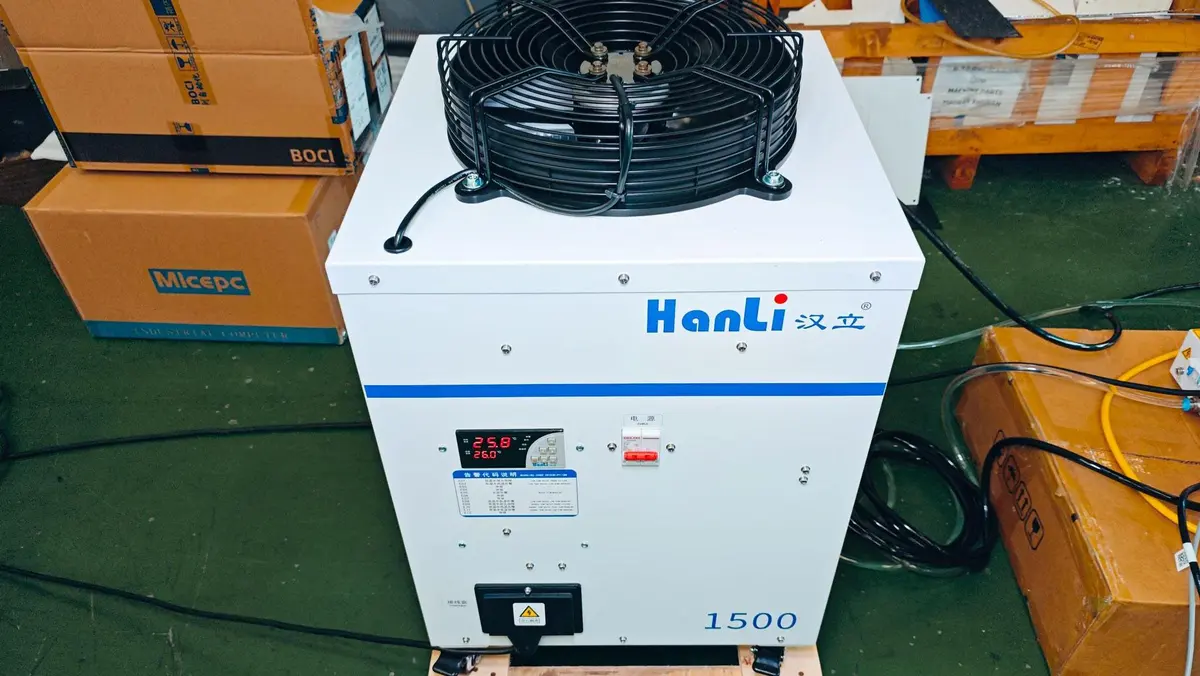
The water chiller controls the operating temperature of the laser source and optical components. Stable cooling helps maintain laser output, protect optical parts, and improve long-term cutting reliability.

Safety functions such as over-temperature alarm, flow protection, and water-level monitoring help protect the laser system. The chiller should be matched with laser power and local workshop conditions.

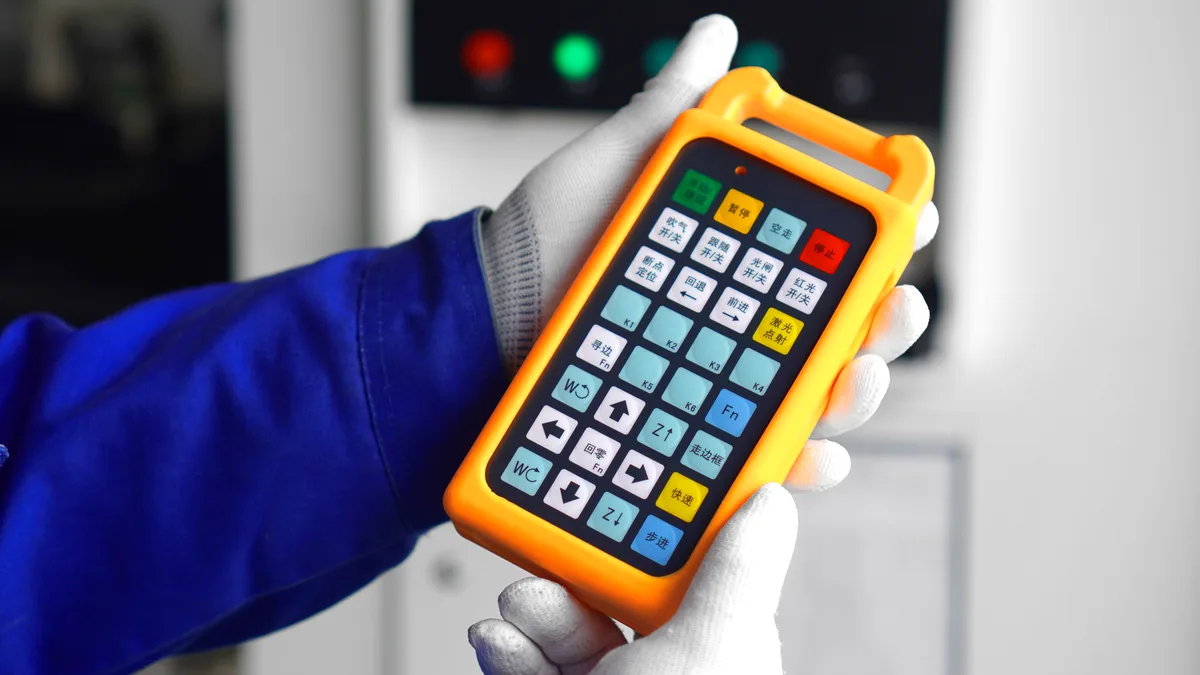
Exchange table laser cutting machine remote controller

Remote Controller

The handheld remote controller allows the operator to control key laser cutting machine movements and auxiliary functions from a convenient working position. Common functions can include axis jogging, edge finding, return operation, frame walking, laser emission confirmation, speed adjustment, and auxiliary gas or light control depending on the final machine configuration.

This remote control improves setup efficiency during plate loading, nozzle alignment, edge finding, and test cutting. It helps the operator stay close to the cutting area while keeping machine movement under direct control, making daily operation more flexible, safer, and easier to manage.

Model Parameter Table

Model Cutting Range Laser & Motion Accuracy
3015 Cutting Range: 3000 × 1500 mm Laser Power: ≤12000 W
Max. Positioning Acceleration: 10 m/s2
Positioning Accuracy: ±0.02 mm/m
Reposition Accuracy: ±0.03 mm
4015 Cutting Range: 4000 × 1500 mm Laser Power: ≤12000 W
Max. Positioning Acceleration: 10 m/s2
Positioning Accuracy: ±0.02 mm/m
Reposition Accuracy: ±0.03 mm
4020 Cutting Range: 4000 × 2000 mm Laser Power: ≤12000 W
Max. Positioning Acceleration: 10 m/s2
Positioning Accuracy: ±0.02 mm/m
Reposition Accuracy: ±0.03 mm
6015 Cutting Range: 6000 × 1500 mm Laser Power: ≤12000 W
Max. Positioning Acceleration: 10 m/s2
Positioning Accuracy: ±0.02 mm/m
Reposition Accuracy: ±0.03 mm
6020 Cutting Range: 6000 × 2000 mm Laser Power: ≤60000 W
Max. Positioning Acceleration: 10 m/s2
Positioning Accuracy: ±0.02 mm/m
Reposition Accuracy: ±0.03 mm
6025 Cutting Range: 6000 × 2500 mm Laser Power: ≤60000 W
Max. Positioning Acceleration: 10 m/s2
Positioning Accuracy: ±0.02 mm/m
Reposition Accuracy: ±0.03 mm
8025 Cutting Range: 8000 × 2500 mm Laser Power: ≤60000 W
Max. Positioning Acceleration: 10 m/s2
Positioning Accuracy: ±0.02 mm/m
Reposition Accuracy: ±0.03 mm
10025 Cutting Range: 10000 × 2500 mm Laser Power: ≤60000 W
Max. Positioning Acceleration: 10 m/s2
Positioning Accuracy: ±0.02 mm/m
Reposition Accuracy: ±0.03 mm
12025 Cutting Range: 12000 × 2500 mm Laser Power: ≤60000 W
Max. Positioning Acceleration: 10 m/s2
Positioning Accuracy: ±0.02 mm/m
Reposition Accuracy: ±0.03 mm
13030 Cutting Range: 13000 × 3000 mm Laser Power: ≤60000 W
Max. Positioning Acceleration: 8 m/s2
Positioning Accuracy: ±0.02 mm/m
Reposition Accuracy: ±0.03 mm

Parameters are subject to change without prior notice. Final laser power, exchange table structure, cutting head, control system, chiller, voltage, dust extraction, and quotation data should be confirmed according to the actual order.

Related PREF Group Pages

FAQs

  • What information should I send before choosing a Exchange Table Laser Cutting Machine?

    Send material type, thickness range, part drawings, required tolerance, daily output target, workshop layout, voltage requirement, and any existing process photos or videos. PREF Group can use this information to recommend a practical configuration.

  • Can PREF Group customize the Exchange Table Laser Cutting Machine?

    Yes. The final machine can be discussed according to working size, capacity, controller preference, safety system, tooling, automation, voltage, and shipping requirements.

  • Are the listed parameters final order specifications?

    The parameter tables are used for model selection and comparison. Final order specifications should be confirmed with PREF Group before quotation, production, or publishing a final datasheet.

  • How do I know if this product is the right machine category?

    Start from the part drawing and the production bottleneck. If the main issue is bending, cutting, welding, grooving, punching, or spare parts compatibility, PREF Group can compare the related product category and recommend the better fit.

WhatsApp

Leave a message!

Leave a message!